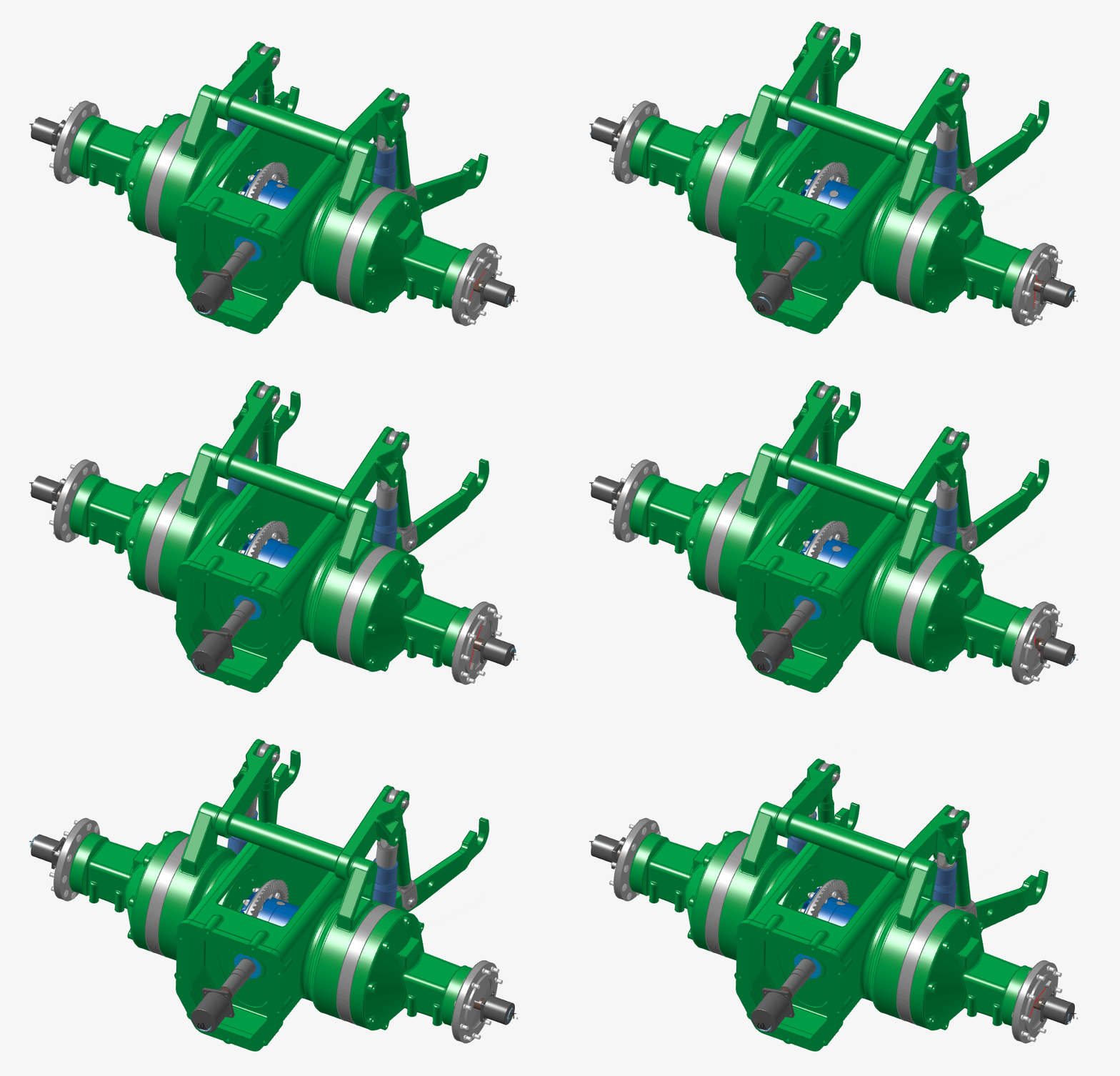
Import Capital Goods (Machinery) / RM without payment of Customs Duty and save duty up to 27.73%
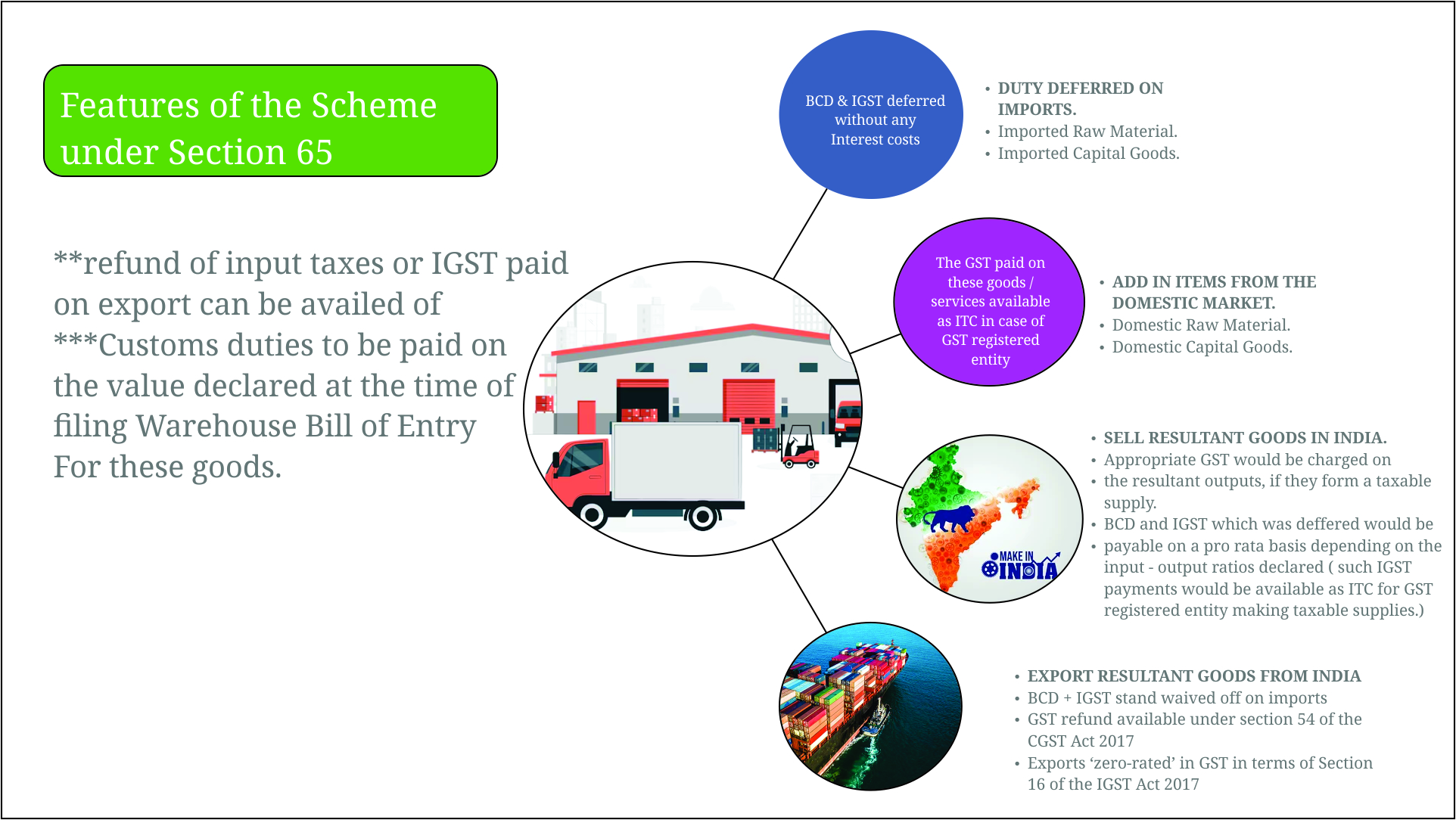
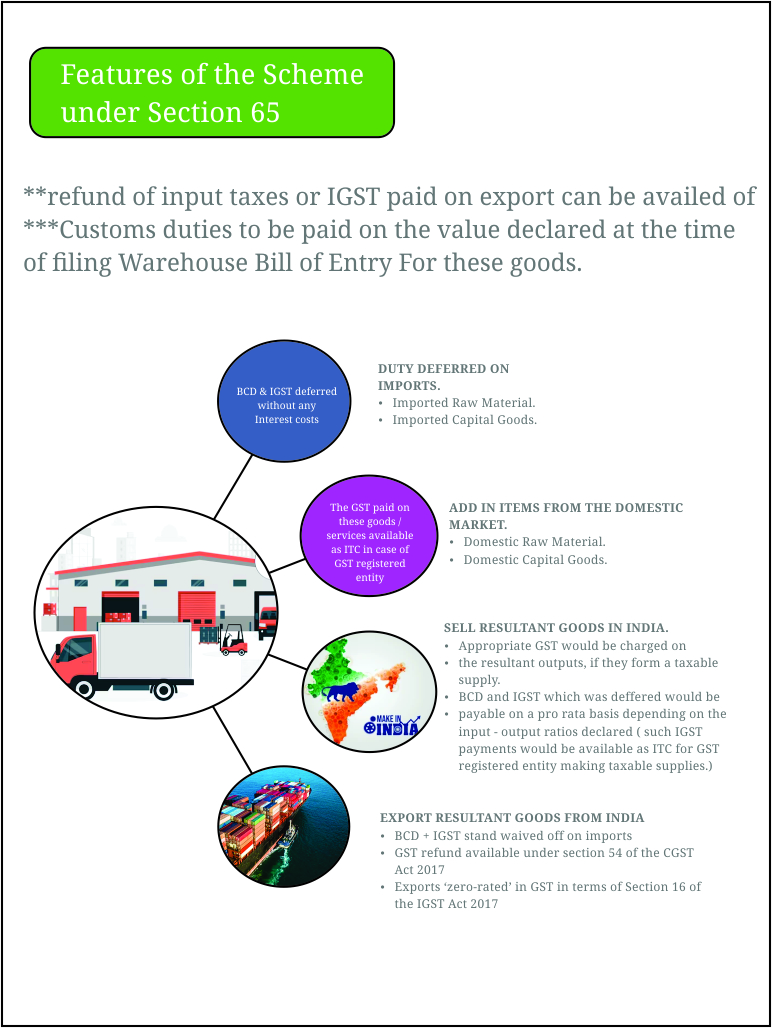
The MOOWR scheme is a strategic initiative from CBIC to defer customs duties on imported goods. MOOWR scheme was introduced by CBIC in 1996 and revamped in 2019 to boost the Make in India campaign and provide foreign businesses with a simplified approval process for manufacturing operations within a bonded warehouse.
The purpose and objective of the MOOWR scheme is to make India a manufacturing hub and an investment destination. CBIC launched this scheme to defer customs duties on imported goods used for manufacturing or other activities such as re-labelling, re-packing, grading, sorting, testing, and repair.
From deferred Customs Duty on imported materials to perpetual license validity and simplified compliance, this scheme provides a supportive framework for thriving businesses.
Defer customs duties, simplify operations, and boost competitiveness with MOOWR.
Support Make in India, promote foreign investment, and create a manufacturing hub.
MOOWR scheme benefits manufacturers in many ways. The following are the key benefits for manufacturers:
Defer or save customs duty on raw materials and capital goods, especially for exports.
No renewal required; indefinite warehousing and easy single-point approvals.
Operate without export obligations or physical customs control—freedom to choose your location.
Effortless bonded transfers with zero minimum investment for setting up your unit.
The MOOWR scheme simplifies customs duty deferral and supports manufacturers with flexible compliance. It promotes India as a manufacturing and export hub without requiring heavy upfront investment.
| S.No. | Particulars | Details |
|---|---|---|
| 1 | Scheme Introduction Date | 01-10-2019 |
| 2 | Validity of the Scheme | Scheme is still valid |
| 3 | Objective of the Scheme | To make India a manufacturing hub and an investment destination |
| 4 | Benefits of the Scheme | Deferred Customs Duty leading to savings on working capital & investment |
| 5 | Who are eligible | New as well as Existing Manufacturing Entrepreneurs |
| 6 | Obligations / Liability | Total Customs Duty including Anti-Dumping & Safeguard Duty |
| 7 | Mandatory Conditions |
1) Insurance favoring President of India 2) Triple Duty Bond (Running Bond) 3) Solvency Certificate 4) CCTV Surveillance |
| 8 | When to Pay Customs Duty | Input material – at removal for domestic sale Machinery – at removal or scrapping |
| 9 | Valuation for CG Sale | Scrap – Original Import Value Export – As per Customs Act Section 14 |
| 10 | Instances Customs Duty Not Payable | 1) Export of finished goods 2) Export of machinery |
| 11 | Multiple Schemes Allowed | Yes |
| 12 | Application Mode | Online |
| 13 | Validity of Certificate | Valid until cancelled or surrendered |
| 14 | Post-License Compliance | Book Keeping, Audit & Returns |
| 15 | Exit Procedure | Option is available |
The MOOWR scheme is a vital and beneficial program for importers dealing with the import of raw materials, additives, consumables, and machinery, providing significant duty deferrals.
The MOOWR scheme is highly useful for importers involved in regular imports of raw materials, additives, consumables, catalysts, jigs, and tools for manufacturing finished goods for domestic sale.
Similarly, the scheme benefits importers who import machinery in bulk for initial project implementation or industry expansion by offering deferred customs duty payments.
Engaging an external agency or consultant is a good choice to ensure proper monitoring and filing of monthly returns, making the process more streamlined and compliant.
The scheme also offers seamless warehouse-to-warehouse transfer, allowing goods to be transferred from one bonded facility to another without paying customs duty, facilitating smooth operations.
Use the calculator below to estimate your duty savings under the MOOWR scheme.
Customs Duty Amount: Rs. 0
IGST Amount: Rs. 0
Total Duty Saved: Rs. 0
IEC (Import Export Code) is required by anyone who is looking to kick-start his/her import/export business in the country. It is issued by the DGFT (Director General of Foreign Trade). IEC is a 10-digit code that has lifetime validity. Predominantly importer merchants cannot import goods without the Import Export Code and similarly.
The Digital Signature Certificate for DGFT is the electronic version of a traditional paper certificate. These certificates are becoming mandated by law in various contexts and industries, including healthcare and the financial sector. It allows you to digitally sign papers and access restricted online resources after establishing your identity.
The RCMC (Registration Cum Membership Certificate) is an authorization document for importing or exporting restricted products according to the Foreign Trade Policy (FTP). Typically, the Export Promotion Councils (EPCs), Commodity Boards, and Export Development Authorities established by the Director General of Foreign Trade (DGFT) for each restricted product issue this certificate.
The Department for Promotion of Industry and Internal Trade (DPITT) has unveiled an upgraded DPITT G2B Portal as part of its efforts to improve transparency and simplicity of doing business. In the article “What is an IEM Registration?” And other information on Industrial Entrepreneur Memorandum (IEM).
MSME registration is also called Udyam registration. The entities that fulfil the MSME classification can apply for MSME registration from the government portal, the Udyam portal. The MSME registration is entirely online and can be obtained from the Udyam registration portal.
EPCG (Export Promotion Capital Goods) Scheme helps in facilitating the import of capital goods for manufacturing quality goods and to augment the competitiveness of India’s export. EPCG scheme enables the import of capital goods that are used in the pre-production, production, and post-production without the payment of customs duty.
DFIA scheme was introduced on 1st May 2006 in place of the Duty-Free Replenishment (DFRC) scheme, and it is similar to the Advance Authorisation Scheme with certain differences. DFIA shall be issued only for the products for which standard Input and Output Norms (SION) have been notified; hence import entitlement must be limited to the quantity given in SION.
The Authorized Economic Operator (AEO) Scheme is a program under the guidance of the World Customs Organization (WCO), SAFE Framework of Standards to secure and facilitate trade globally. An AEO (Authorised Economic Operator) is a business entity involved in the international movement of goods requiring compliance with provisions of the National Customs law and is approved by or on behalf of the national administration in compliance with World Customs Organization (WCO) or equivalent supply chain security standards.
The concept of refund in the parlance of GST is crucial for a taxpayer as it facilitates trade by releasing blocked funds for working capital, expansion, and modernization of existing business. The GST refund can arise on account of excess cash balance in the electronic cash ledger or the accumulated Input Tax Credit unable to be utilized for tax payments due to zero-rated sales or inverted duty structure or on account of various other reasons that have been discussed below in the article.
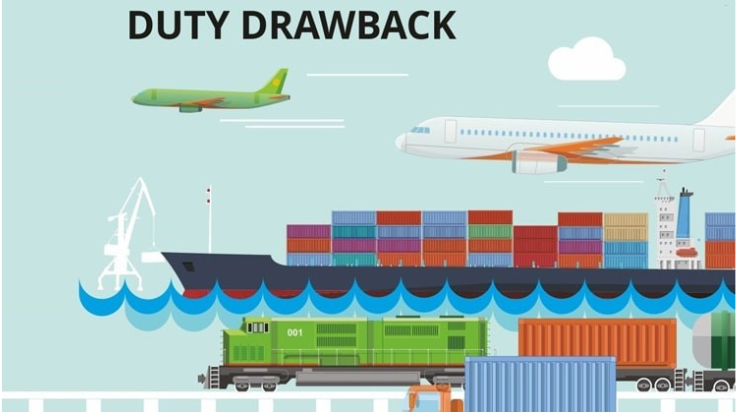
Duty drawback refers to the refund of import duty paid on goods under specific circumstances, primarily when the goods are re-exported or used in the production of exported goods. The core principle behind duty drawback is that if goods imported into India and consumed or used outside the India, the import duty paid on them should be refunded.
The Remission of Duties and Taxes on Exported Products (RoDTEP) scheme was set forth by the Government of India (GOI) on 14 September 2019 with an aim to encourage exports. It was issued to allow reimbursement of taxes and duties, which aren’t exempted or refunded through any other scheme in line with the World Trade Organization (WTO) norms.
As part of its overseas trade policy, the Indian government introduced the Star Export House Certificate, also known as the Status Holder Certificate. Business executives who have excelled in international commerce and made significant contributions to the nation's overseas trade are awarded the Certificate or Status.
The Interest Equalisation Scheme (IES) is a transformative initiative by the Indian government aimed at promoting export competitiveness and providing financial support to exporters. Under this scheme, eligible exporters receive interest equalisation benefits on pre and post-shipment export credit, reducing the cost of credit and enhancing the competitiveness of Indian exports in the global market.
Exports of certain commodities may require special approval or license. SCOMET lists down a few such items. SCOMET is an acronym for Special Chemicals, Organisms, Materials, Equipment, and Technology that has both civilian and military use. Therefore, the export of these items is regulated by India’s Foreign Trade Policy. The exporter of these items must obtain a license from the Director General of Foreign Trade under the Ministry of Commerce.
The import and export of some items are strictly regulated. These items address issues relating to society, health, the environment, wildlife, and national defense. Products whose export or import is prohibited under the International Trade Classification (ITC) may only be exported or imported in compliance with a DGFT authorization or public notice.
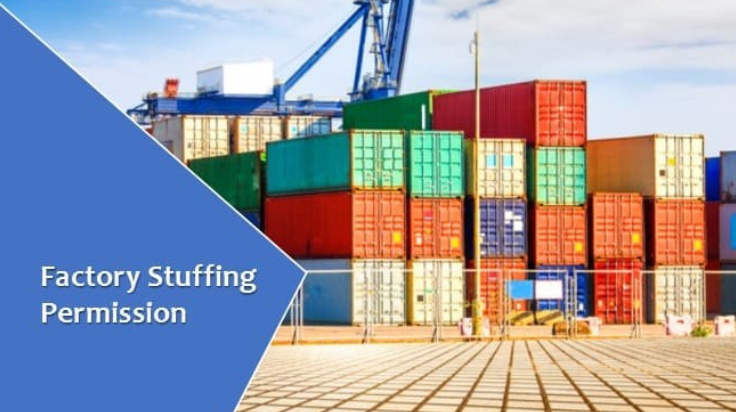
In simple terms, Factory Stuffing / Self-Sealing Permission means that an empty container comes to your factory from the nearest ICD or main port, you stuff the goods, and seal it yourself. You don't need to send your goods to CFS for loading.
Special Valuation Branch (SVB Customs) is a unit of the Custom House the function of which is to investigate the transactions involving the association between the suppliers including any technical collaboration between the parties etc.
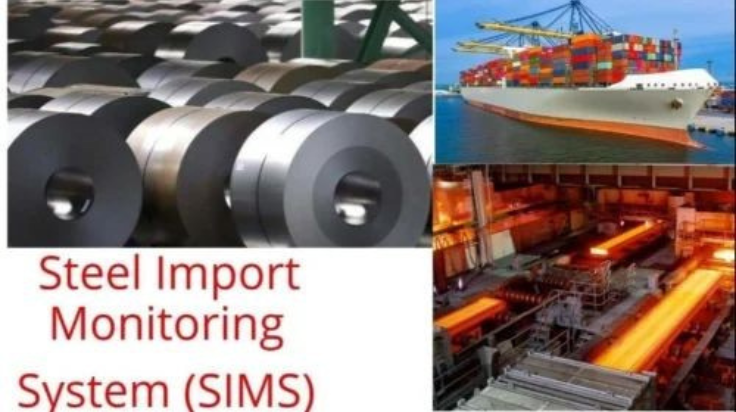
The government of India implements the SIMS registration for arranged import and export of steel in India. The SIMS registration is issued by the Directorate General of Foreign Trade (DGFT), Ministry of Commerce and Industry. The SIMS registration is a record tracker of the government for the steel import and export of India. Due to the multiple importance of steel imports, such as growing infrastructure and increased need for specialized steel grades, the SIMS registration is important for the entities that deal with steel imports in India.
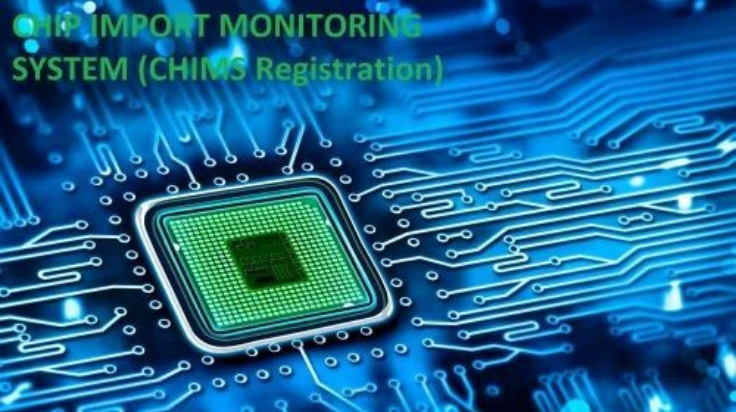
The CHIMS registration is a registration license introduced by the government of India for the import of electronic integrated circuits (chips) into the country. Implemented in 2021, this registration is required to ensure the tracking and monitoring of the import of chips into the country. Here, the chip means the facilitator of electronic devices such as computers, laptops, smartphones, and even refrigerators and cars.
The Coal Import Monitoring System (CIMS) is an important regulatory framework mounted by the Government of India to supervise and manipulate the import of coal. This system's objectives are to streamline the import approach, make certain adherence to excellent and environmental necessities, and provide transparency in coal exchange. As a coal importer, appealing to the CIMS scheme allows you to navigate the complexities of India's regulatory landscape at the same time as optimizing your supply chain.
The Paper Import Monitoring System (PIMS) is a regulatory framework set up by the Government of India to reveal and manage the import of paper products. This machine hobbies to streamline the import process, make sure adherence to tremendous requirements and provide transparency in paper alternate. With a growing emphasis on excellent manipulation and regulatory compliance, the PIMS scheme is crucial for agencies involved in the importation of paper products.
The Non-Ferrous Metal Import Monitoring System (NFMIMS), introduced by the Directorate General of Foreign Trade (DGFT), aims to monitor and regulate the import of non-ferrous metals like copper and aluminum. The Non-Ferrous Tracking System became evident as the first project to ensure the traceability and control of the import of these metals.
The process of getting a quality standard certificate for producing and selling different items in India from the Bureau of Indian Standards (BIS) is known as BIS Certification. Getting a BIS certificate is mostly optional, giving companies the choice to either obtain a certification or not. To guarantee adherence to Indian standards, the central government does, however, require obligatory certification for a few of the items.
Compulsory Registration Scheme is referred to as CRS. In 2012, the Department of Electronics and Information Technology introduced this scheme. All electronic products that are listed as required by the Mandatory Product List for the Bureau of Indian Standards (CRS), including printers, RFID/smart card readers, Bluetooth speakers, headphones, earbuds, CCTV cameras, secondary cells, batteries, and other similar devices, must be registered with the Bureau of Indian Standards.
The Indian Standard Institute, or ISI, is a certification received by the Bureau of Indian Standards that certifies items by stating that they meet stringent safety requirements and are safe to use by customers. In 1947, the Department of Industries and Supplies launched the ISI. The establishment of standards for Indian industries was the aim of the ISI Mark. ISI was taken over by the more powerful Bureau of Indian Standards in the middle of the 1980s.
Under Scheme-I and Schedule-II of the Conformity (Assessment) Regulations, 2018, and the BIS Act, 2016, the Bureau of Indian Standards (BIS) is responsible for overseeing the Foreign Manufacturers Certification Scheme (FMCS). This program is intended for outside producers who want to be certified to use the Standard Mark (ISI Mark) on goods made in accordance with Indian standards.

Introduced in the year 1981 by Govt. of India, the EOU Scheme’s main thrust is to boost and attract sector specific exports from all parts of India having huge potential near to raw material source. The Scheme has undergone several changes over a period and the present policy parameter is most liberalized and conducive to the entrepreneur for setting up its Export Oriented Unit.
A certificate of origin or root, to send out or to import the products is vital report in universal exchange which certifies that the nation where the products or items were made. And this certificate is issued by the assigned specialists or designated authorities, such as chambers of commerce or traditions organization which are customs agencies.
BEE is short for Bureau of Energy Efficiency and is an agency of the government. It falls under the Ministry of Power. The purpose of BEE is to implement programmes that create awareness about energy efficiency among people. As a part of BEE, one of its most significant functions is to develop benchmarks and award star ratings on electrical gadgets.
EPR Certificate is approved and issued by the Central Pollution Control Board. It guarantees that waste is collected, transported, treated, stored, disposed of, or recycled in a manner that is safe for the environment and the general population.
EPR stands for Extended Producers Responsibility and is a government policy that extends the responsibility for the treatment of electronic wastes and their disposal in an environmentally sound manner by producers, importers, manufacturers, and brand owners.
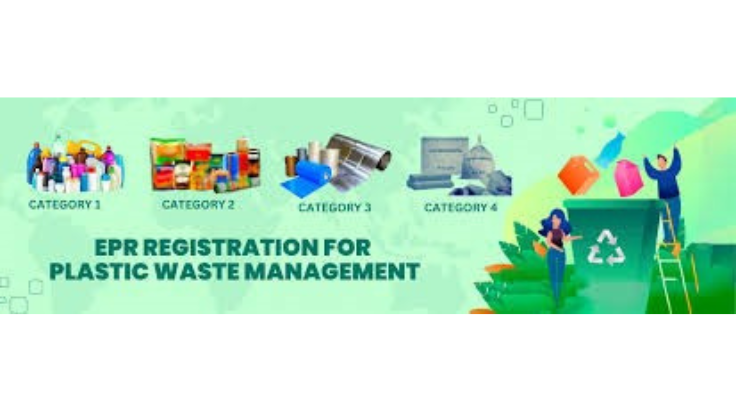
In order to handle plastic waste and keep it under control, Indian makers and importers of goods are required by law to comply with Extended Producers Responsibility or EPR. To conduct business in India, manufacturers and importers need to get an EPR certificate from the Central Pollution Control Board or CPCB, a division of the MoEFCC, the Indian government.
The Extended Producer Responsibility or EPR initiative has been implemented by the Indian government, which calls for battery importers and producers to manage and dispose of the battery waste in a way that is environmentally conscious whilst simultaneously holding them accountable for the volume of waste they produce throughout the products' shelf lives.
Under the Hazardous & Other Waste (Management) Amendment Rules 2022, any person and business entity engaged in the manufacturing, distribution, sales, reuse and recycling, and import of waste tyres shall be responsible for waste tyres for environmentally safe management and related compliances.
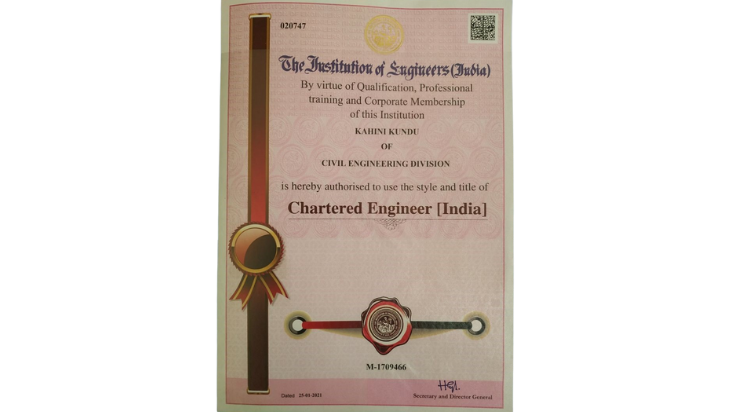
Possessing a Chartered Engineer Certificate from an independent inspection company is an essential requirement for exporting used or refurbished machinery to India. This is an important requirement of Indian customs. The inspection company from which Chartered Engineer Certificate will be obtained must be authorized by the Indian Directorate General of Foreign Trade (DGFT).
Have you purchased your groceries from a local Kirana store before? Did you happen to see any particular weights being used for any particular commodity? Weights and measurements play a crucial role in human existence by guaranteeing the standards of quality, quantity, and fair value. To promote ethical business practices and protect consumer rights, the Indian government implemented the Legal Metrology Act in 2009.
WPC Certificate: In our fast-globalized world, people cannot imagine living a day without any kind of wireless device. The use of radio frequency devices such as handheld phones or any other type of automatic equipment in their daily lives. But, to ensure the safety and operation of these tools appropriate regulation is required. A situation where WPC Certificate steps into the breach.
REX Certification is short for Registered Exporter System Certificate. It is a document used in international trade signifying the self-certification system established by the European Union (EU). The REX Certification replaces the traditional method of authorities issuing certificates of origin. Instead, exporters are now required to provide a REX certificate of origin, which is also referred to as a 'statement of origin'.
Modern global market operations require organizations to achieve product safety, quality performance, and regulatory compliance as requirements to market their products in Europe and all over the world. Obtaining CE Certification fulfils European Union (EU) health and safety standards and environmental protection specifications as an important product quality assurance method.
To export products to GCC countries, companies need G Mark certification, also known as G Mark. Companies must show their products meet safety criteria that follow Gulf standards. When a business wants to sell in GCC markets, it must pass the G Mark requirements because it shows they meet the standards while building customer confidence and ensuring product reliability, quality, and regulatory compliance.
RoHS stands for Restriction of Hazardous Substances. It restricts the usage of certain harmful substances used in electrical and electronic equipment. In India, there is a great demand for electronic products that use hazardous substances which harm the environment and human health.
As per the Indian Telegraph Rules, 2017, the Department of Telecommunications under the Ministry of Communications has established Mandatory Testing and Certification of Telecommunication Equipment in India. Under this scheme, the manufacturers, importers, and service providers of telecom equipment must get their products tested and certified by the Telecommunications Engineering Center (TEC) before selling them in the Indian market.
The Atomic Energy Regulatory Board (AERB) is made to ensure that the use of nuclear energy and ionizing radiation in India is to mitigate any undue risk to public health and the environment. Obtaining AERB Licence is mandatory for the operation of Medical Diagnostic X-ray equipment and is a statutory obligation as per Atomic Energy (Radiation Protection) Rules 2004, propagated under Atomic Energy Act, 1962.

Get in touch for MOOWR scheme assistance and expert guidance
Reach out to us for assistance with the MOOWR scheme, duty savings, or any other inquiries. Our experts are here to help you navigate compliance, documentation, and maximize your benefits.